When Beta Feedback Shapes Voice Line Priorities Across Narrative-Driven Titles
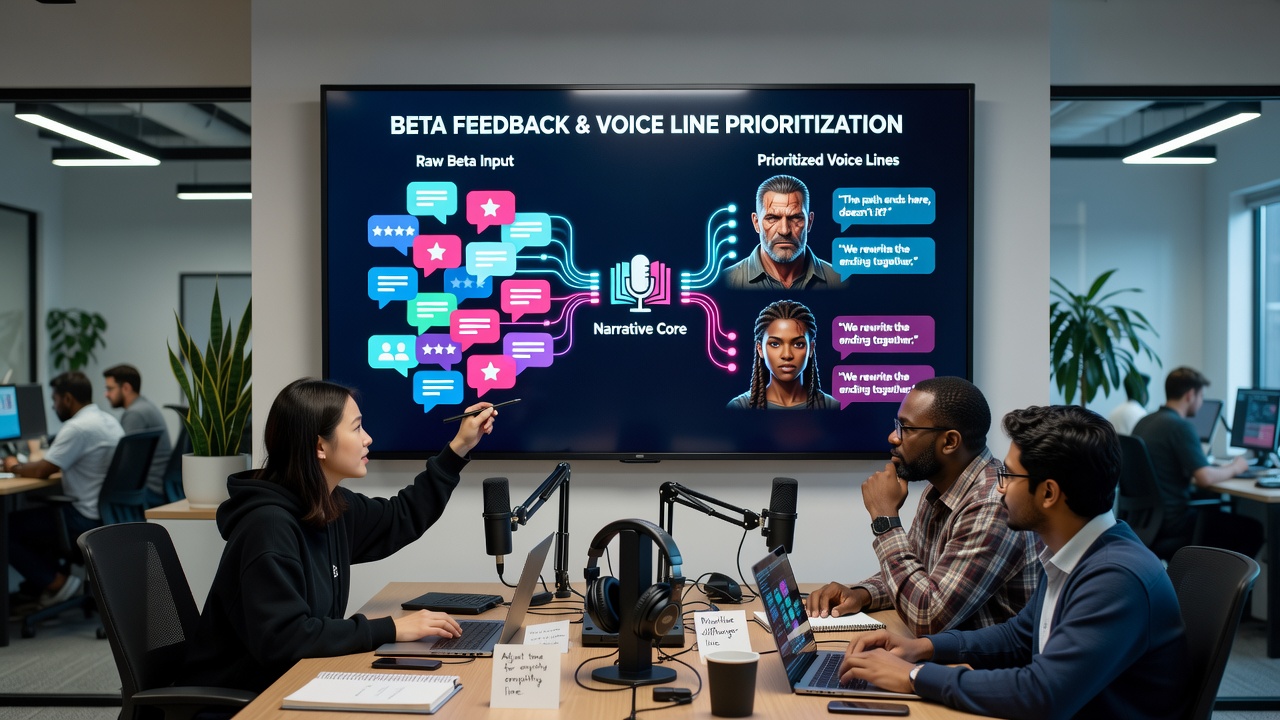
Developers in narrative-driven titles track player responses during closed beta phases to determine which voice lines receive additional recording sessions or script revisions before launch, and data from multiple studios shows this process has accelerated since 2024 as feedback tools integrate directly with dialogue databases.
Beta Testing Mechanisms in Story-Focused Games
Teams collect quantitative metrics such as line completion rates alongside qualitative comments through in-game surveys and external forums, while researchers at institutions including the University of Alberta have documented how these inputs feed into prioritization matrices that rank dialogue segments by player engagement levels. Studios often run multiple beta waves, each lasting two to four weeks, and adjust recording schedules based on patterns that emerge when thousands of participants interact with branching narrative paths.
Voice line priorities shift when beta data reveals low retention around specific character interactions or plot reveals, prompting writers to rewrite lines for clarity or emotional impact before final audio capture occurs. This workflow connects directly to production pipelines where audio directors review heat maps generated from player session logs.
Feedback Integration and Dialogue Adjustments
According to reports from the Entertainment Software Association, narrative titles now allocate 15 to 20 percent of post-beta development time to voice work revisions driven by tester input, and this allocation has grown steadily through mid-2026. In July 2026 several major releases incorporated last-minute line swaps after beta participants flagged repetitive phrasing in companion character exchanges.
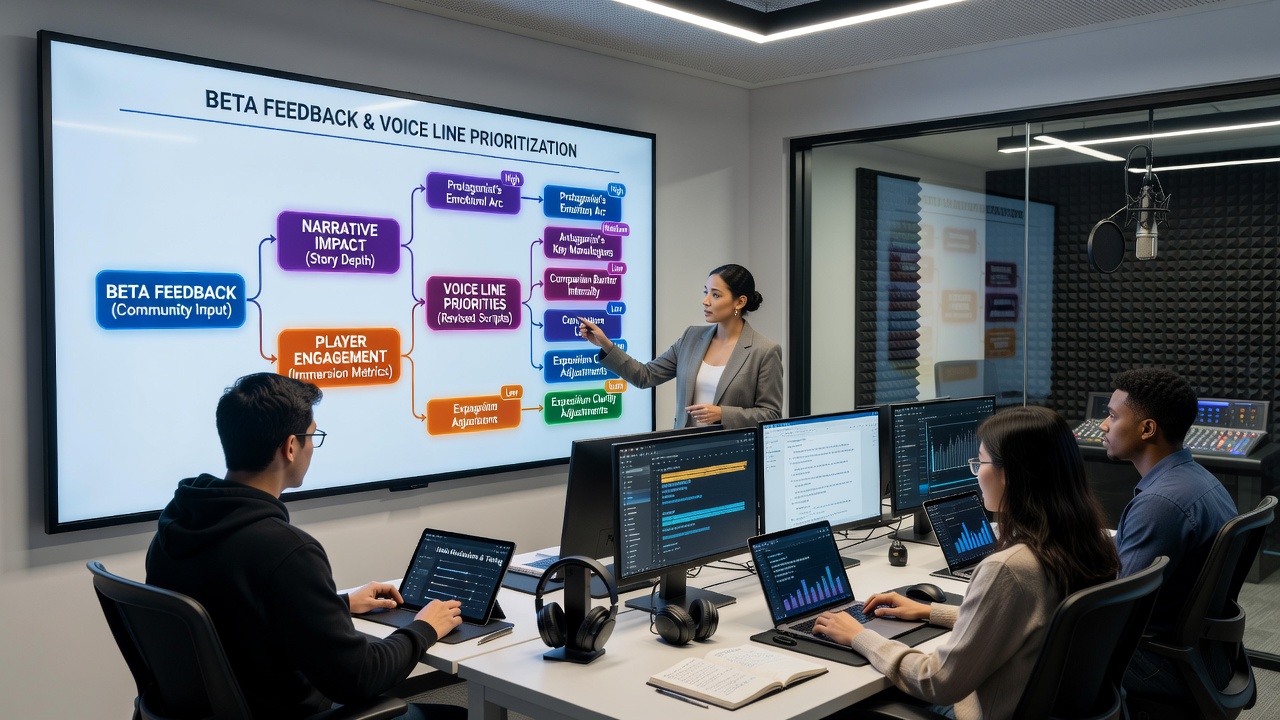
Developers use tagging systems to categorize comments by theme, such as confusion over lore references or dissatisfaction with tonal delivery, then cross-reference those tags against completion statistics pulled from telemetry. The result is a ranked list that audio teams use to schedule actors for additional booth time.
Recent Examples from Narrative Releases
One studio handling an open-world story title in 2025 reordered over 40 voice lines after beta feedback highlighted pacing issues in key quest chains, and internal logs later showed improved completion rates in subsequent test builds. Observers note that similar adjustments appeared across multiple projects where companion dialogue received the largest share of revisions because players spent the most time in those interactions.
Data from the Interactive Games and Entertainment Association of Australia indicates that narrative-driven games released between 2024 and 2026 averaged 12 percent more dialogue variants in final versions compared with pre-beta scripts, largely due to feedback loops that identified underused branches. These variants often addressed regional accents or cultural references flagged by international beta participants.
Production Timeline Impacts Through 2026
Teams compress recording windows when beta results arrive late in the cycle, forcing producers to book voice talent on short notice and prioritize lines that affect the largest number of players. This compression has led some studios to adopt modular recording techniques where individual sentences can be swapped without redoing entire scenes.
Figures from industry tracking services reveal that titles incorporating beta-driven voice changes maintained higher average session lengths post-launch, although the causal link remains under study by academic groups examining player retention curves. The process continues to evolve as machine-learning tools begin to cluster feedback themes automatically.
Conclusion
Beta feedback loops now form a standard component of voice production planning in narrative-driven games, and the practice has produced measurable shifts in how studios allocate resources for dialogue work. Continued monitoring of these patterns through 2026 and beyond will show whether the trend toward data-informed line prioritization expands to additional genres or remains concentrated in story-heavy projects.