Vectors of Victory: Decoding Pathfinding Algorithms in Competitive Real-Time Strategy Environments
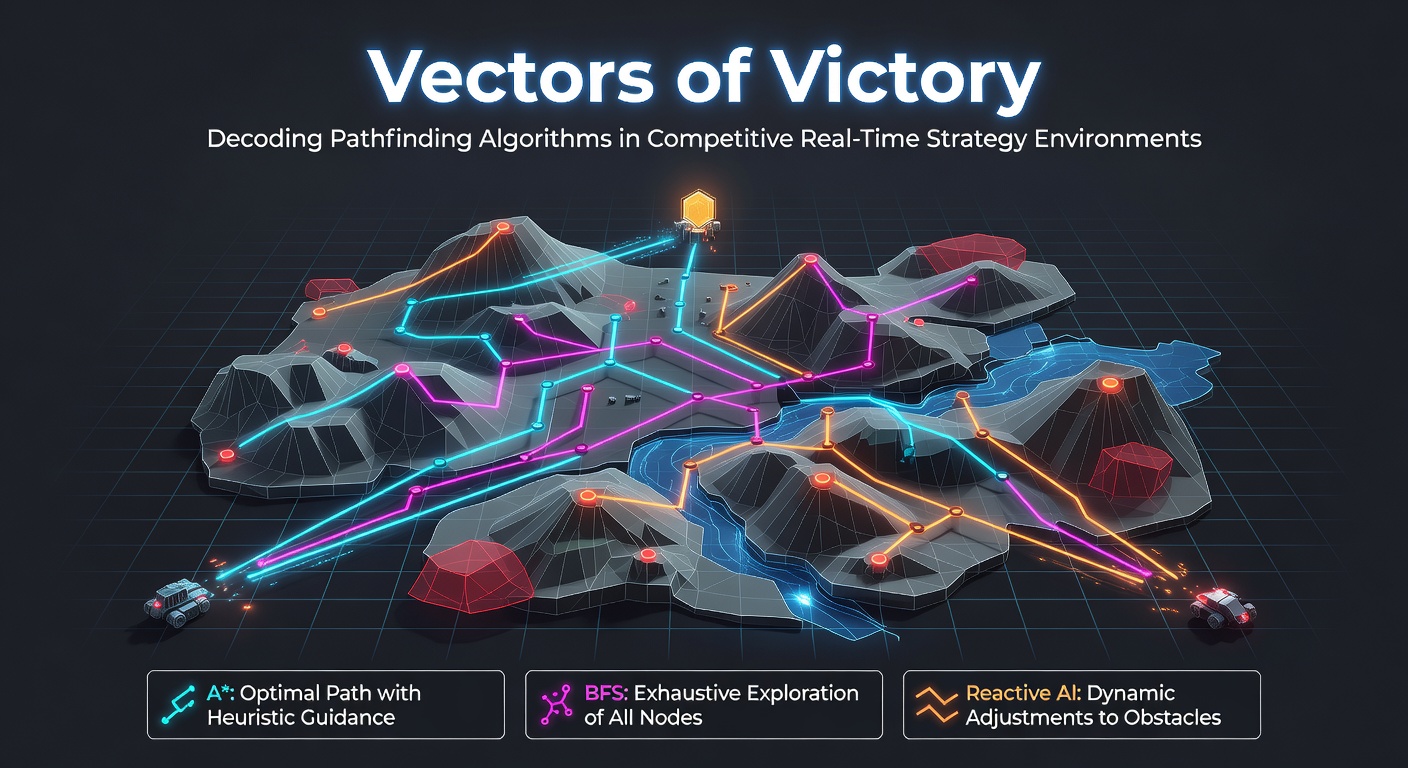
Pathfinding algorithms form the backbone of movement and positioning in competitive real-time strategy games, where players issue commands to dozens or hundreds of units that must navigate complex, changing environments without colliding or getting stuck. These systems calculate efficient routes from one point to another while accounting for terrain costs, obstacles, and dynamic elements like enemy units or destructible structures, and researchers have refined them over decades to handle the demands of esports tournaments and professional play.
Core Algorithms and Their Implementation
Developers rely on variants of A* search as a starting point in most RTS titles because it balances speed with accuracy by using heuristics to estimate remaining distance while exploring node graphs that represent the game map. Data structures such as binary heaps speed up priority queue operations during searches, allowing the algorithm to process thousands of path requests per second in large-scale battles. Studies from institutions like the University of Alberta highlight how optimized A* implementations reduce CPU load in titles that feature thousands of simultaneous unit movements, and competitive players notice the difference when their armies respond instantly to flanking orders.
Grid-based representations work well for early RTS designs yet give way to navigation meshes in modern engines because meshes divide walkable space into convex polygons that permit smoother, more natural-looking paths around irregular terrain features. Engineers adjust polygon density based on map scale, with tighter meshes near choke points and wider ones across open fields to cut down on unnecessary calculations. Flow field techniques extend this approach by precomputing directional vectors across entire regions, enabling groups of units to move in coordinated formations without each one recalculating its own route from scratch.
Handling Dynamic Environments in Tournaments
Competitive matches introduce constantly shifting obstacles as players construct buildings, destroy bridges, or deploy units that block passages, forcing pathfinding systems to update in real time rather than relying solely on static precomputation. Hierarchical pathfinding breaks maps into layered abstractions so that high-level route planning occurs quickly at a coarse level while fine details get resolved only when units approach their destinations. Observers note that games supporting large-scale multiplayer events often integrate these layers with predictive adjustments that anticipate likely player actions based on current unit compositions.
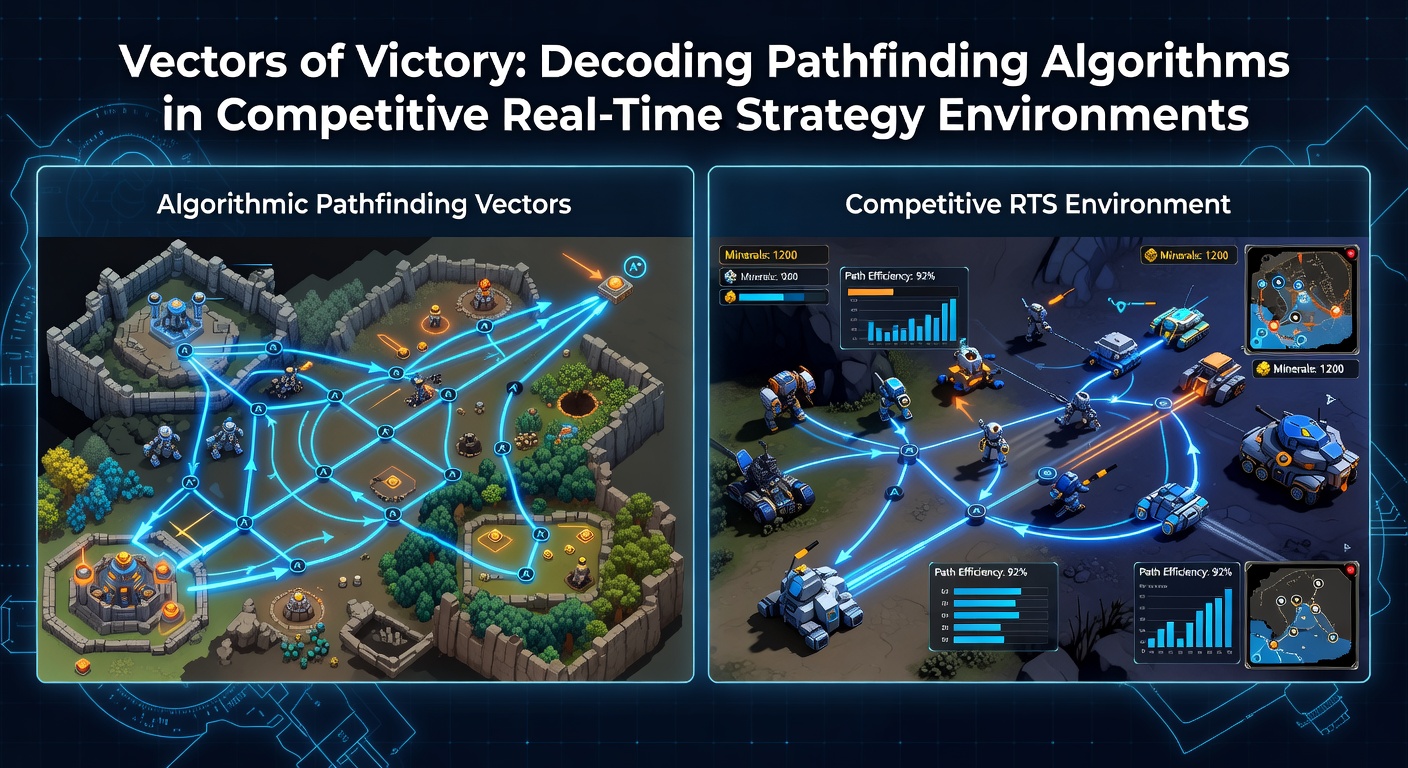
Performance metrics collected during major events show that pathfinding failures, such as units clustering at dead ends or failing to path around newly placed walls, can swing match outcomes within seconds. Developers therefore incorporate fallback behaviors like temporary waypoint adjustments or local avoidance steering that kicks in when global paths become invalid. In May 2026, ongoing professional circuits continue to test updated pathing modules in patches released for established franchises, with teams analyzing replay data to identify maps where certain choke points expose weaknesses in the underlying algorithms.
Optimization Strategies and Hardware Considerations
Multithreading allows path requests to run across multiple CPU cores, while GPU-accelerated variants explore parallel search frontiers for massive unit counts that exceed traditional single-thread limits. Memory caching stores frequently used route segments so that repeated queries between the same regions avoid redundant computation. Industry reports from the Entertainment Software Association indicate steady investment in these optimizations because professional players demand frame-perfect responsiveness even during chaotic late-game scenarios involving hundreds of entities.
Case examples from widely played titles demonstrate how small tweaks, such as weighting paths to favor high-ground positions or incorporating vision-based line-of-sight checks into cost calculations, influence strategic depth without adding noticeable latency. Researchers at various academic centers continue to publish comparative benchmarks that measure A* against newer methods like D* Lite for replanning efficiency when maps change rapidly.
Future Directions in Algorithmic Refinement
Machine learning integration now appears in experimental builds where models trained on millions of professional replays predict likely unit destinations and pre-warm path caches accordingly. This hybrid approach combines classical search guarantees with learned priors that reduce average search depth in familiar map layouts. Geographic diversity in development teams brings fresh perspectives, with contributions from European and Asian studios emphasizing different trade-offs between visual fidelity and computational cost.
Conclusion
Pathfinding remains an active area of refinement because even minor gains in efficiency translate directly into competitive advantages during high-stakes matches. Continued collaboration between academic researchers, engine developers, and esports organizers ensures that the underlying vector calculations keep pace with increasingly complex game designs and larger player bases worldwide.