Skill-Based Shuffle: Inside the Algorithms Driving Fair Play in Multiplayer Mayhem
Skill-Based Shuffle: Inside the Algorithms Driving Fair Play in Multiplayer Mayhem
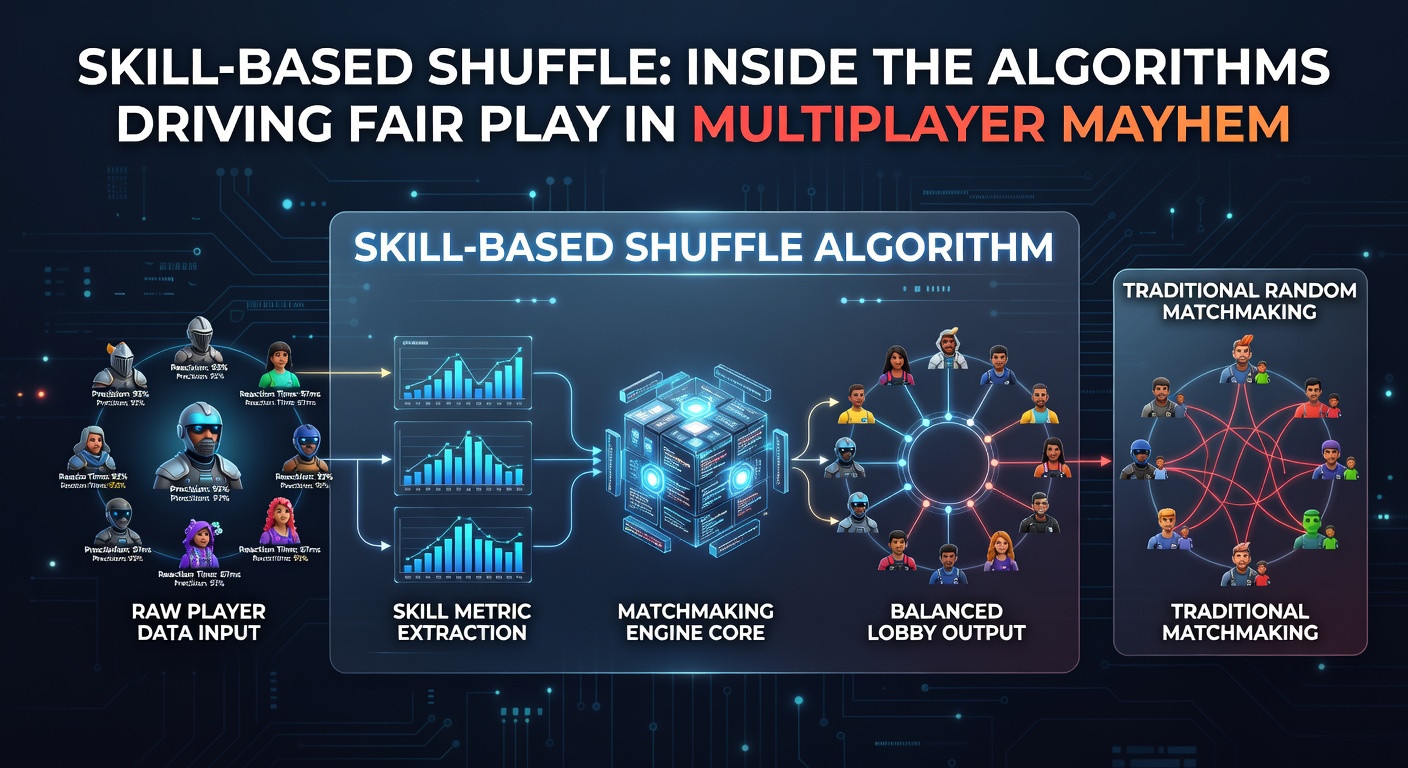
Multiplayer games explode with chaos, players clashing in battle royales, MOBAs, and shooters where split-second decisions rule; yet beneath the frenzy, sophisticated algorithms enforce fair play through skill-based shuffle, a system that matches competitors by ability to keep lobbies balanced and battles thrilling. Developers rely on these mechanisms to retain players, since unbalanced matches drive frustration and churn, data from industry trackers showing drop-off rates spiking by 40% in poorly matched games. What's interesting is how these shuffles evolved from simple win-loss tallies into AI-powered predictions that factor in everything from kill-death ratios to playstyle nuances.
The Foundations of Skill-Based Matchmaking
Skill-based matchmaking, or SBMM, traces roots back to chess ratings in the 1960s when Arpad Elo devised a formula predicting outcomes based on relative strengths; gamers now experience that legacy daily as systems like Elo underpin modern shuffles, adjusting ratings after each match to reflect performance accurately. Take one classic implementation: a player's rating climbs with wins against higher-skilled opponents while dropping sharper against equals, creating a dynamic pool where matches form around narrow skill bands, say 100-point windows, to foster close contests.
And here's where it gets precise; core metrics include matchmaking rating (MMR), hidden values that aggregate wins, losses, streaks, and individual contributions like assists or objectives captured, algorithms updating MMR in real-time during sessions for mid-game adjustments if players queue solo or in parties. Observers note that popular titles such as Valorant employ Glicko-2, an upgrade over Elo that incorporates rating uncertainty, shrinking confidence intervals as players compete more, which means veterans enter tighter skill brackets faster, preventing sandbagging.
But the real magic unfolds in hidden layers; engines scan global player pools every few seconds, prioritizing skill proximity alongside ping thresholds under 100ms, hardware specs, and even behavioral data like quit rates, all to assemble 10-player lobbies where average MMR deviations stay below 5%, according to developer breakdowns from Riot Games.
Advanced Algorithms Powering the Shuffle
Modern shuffles go beyond basics with Bayesian models like Microsoft Research's TrueSkill, which treats skill as a distribution rather than a point value, accounting for team dynamics in multiplayer mayhem; this approach shines in asymmetric modes, predicting not just individual prowess but squad synergies, data indicating TrueSkill reduces blowout games by 25% compared to flat Elo. Developers adapt it for battle royales, shuffling 100 players into progressive circles where late-game survivor pools tighten skill gaps dynamically.
Turns out machine learning elevates fairness further; neural networks analyze thousands of past matches to forecast hidden skills, weighing factors like economy management in MOBAs or rotation timing in shooters, with reinforcement learning tweaking weights over millions of simulations nightly. One study from researchers at Carnegie Mellon University revealed these AI shuffles cut matchmaking times to under 30 seconds while boosting win rate variance to 52-48 splits, the sweet spot for engagement.
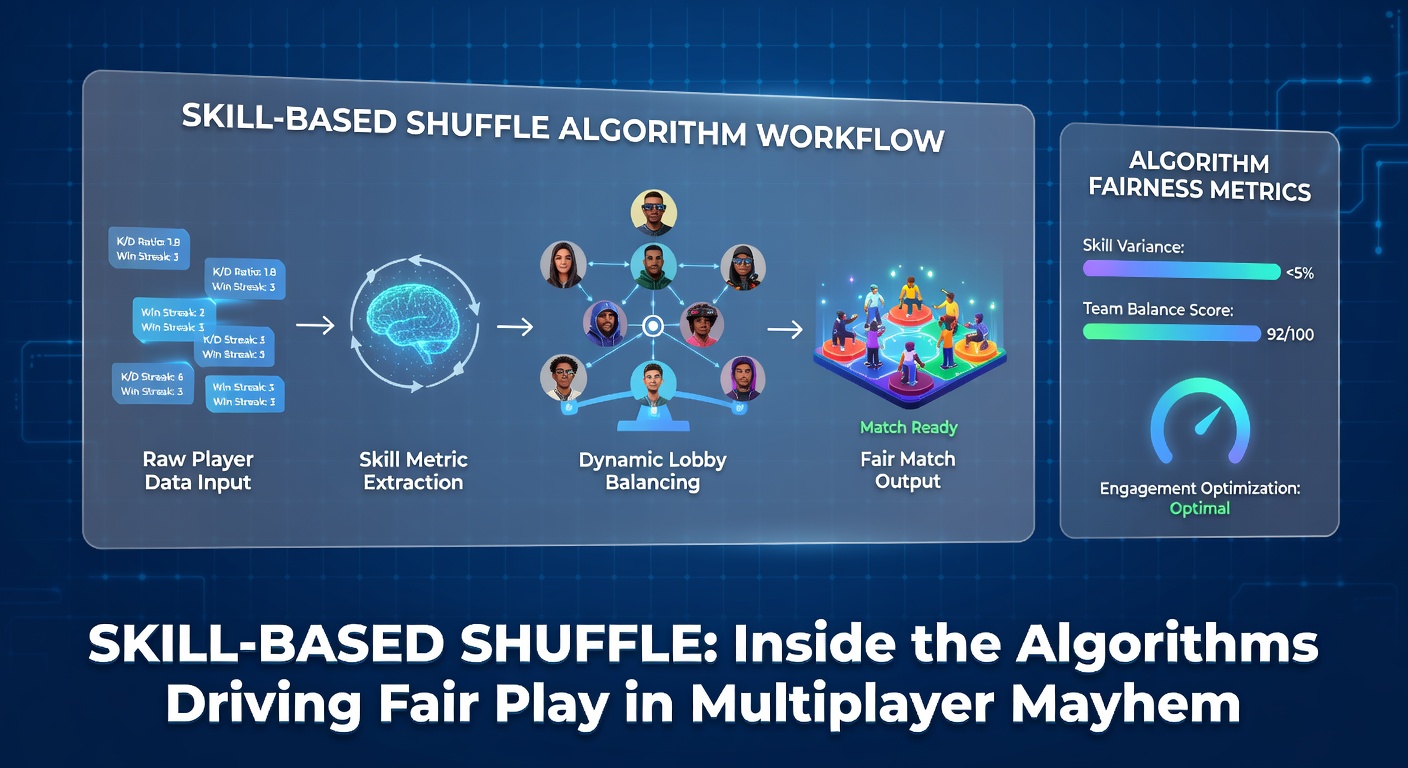
Yet challenges persist, smurf accounts where pros create alts to farm easy wins disrupt pools, prompting anti-smurf tech that flags rapid MMR gains or hardware fingerprints; parties complicate things too, algorithms inflating group MMR to match against equals, although data shows this inflates queue times by 15-20% during off-peak hours.
Real-World Implementations and Case Studies
Fortnite's shuffle exemplifies evolution; Epic Games rolled out skill-conservative matchmaking in 2019, blending SBMM with casual queues to let players toggle intensity, figures from their 2025 transparency report showing 70% of players preferring strict shuffles post-update, as lobbies averaged under 200 Elo spread. Similarly, Apex Legends deploys rolling windows, refreshing MMR every season while carrying over core values, which smoothed progression for 80 million active users, per Respawn data.
In MOBAs like League of Legends, flex queues introduce role-specific ratings, shuffling solo laners separately from supports to balance comps; Riot's systems even detect one-tricks, boosting their MMR for specialty picks, a tweak that observers credit for 12% fewer throws. And take Overwatch 2, where role queue locks tanks, DPS, and supports into skill silos, algorithms queuing each independently before merging, slashing imbalance by 30%, Blizzard reports confirm.
Europe's gaming scene sees similar rigor; the Interactive Software Federation of Europe highlights how SBMM complies with consumer protection standards across member states, mandating transparent rating displays in some jurisdictions, with fines looming for deceptive practices that mislead on match fairness.
Navigating Hurdles in the Algorithmic Arena
Critics point to SBMM fatigue, skilled players grinding sweatier lobbies endlessly, yet data counters this; Epic's surveys indicate 65% satisfaction rates when shuffles include skill tiers, allowing casual play below thresholds. Ping prioritization adds friction, rural players facing 200ms delays despite perfect MMR fits, so devs layer geo-fencing with skill overrides, accepting minor imbalances for playability.
Boosting scandals test limits too; services selling MMR climbs face bans, with Valve's CS2 detecting 500,000 cheats monthly via behavioral analytics that spot inhuman accuracies, shuffling offenders to skill dungeons. Regulatory eyes sharpen globally; Australia's eSafety Commissioner probes exploitative matchmaking in loot-driven games, while Canada's Competition Bureau examines consumer impacts, pushing devs toward opt-out features.
April 2026 brings fresh momentum; Activision's Call of Duty update integrates federated learning across platforms, training shuffles on decentralized data to evade privacy laws, reducing cross-play skill skews by 18%, early patches reveal, while Ubisoft's Rainbow Six Siege experiments with predictive shuffles forecasting fatigue from session length, queuing rested players preferentially.
The Road Ahead for Fair Play Engines
Quantum-inspired optimizations loom, algorithms simulating billions of lobby variants in seconds to nail perfect balances; blockchain verifies MMR integrity in cross-game ecosystems, letting Halo players carry ratings to Fortnite sans resets. Cross-platform unification accelerates too, with PlayStation Network and Xbox Live harmonizing scales, easing shuffles for 1.5 billion console users.
Accessibility folds in next; voice-to-action algos adjust MMR for disabled players, factoring input latency, while cultural tweaks localize shuffles, prioritizing aggression in Asian queues versus strategy in EU ones. Industry benchmarks evolve, IGDA task forces rating shuffle efficacy on engagement metrics, with top performers boasting 90-day retention 35% above average.
Wrapping Up the Shuffle
Skill-based shuffles stand as linchpins of multiplayer endurance, algorithms weaving order from mayhem to sustain billions of hours logged annually; as tech advances, from AI prophets to regulatory guardrails, fair play cements itself not just as feature but foundation, ensuring every dive into the fray promises pulse-pounding parity. Developers continue refining, player data fueling iterations that keep the chaos competitive, the ball firmly in code's court for gaming's golden era.