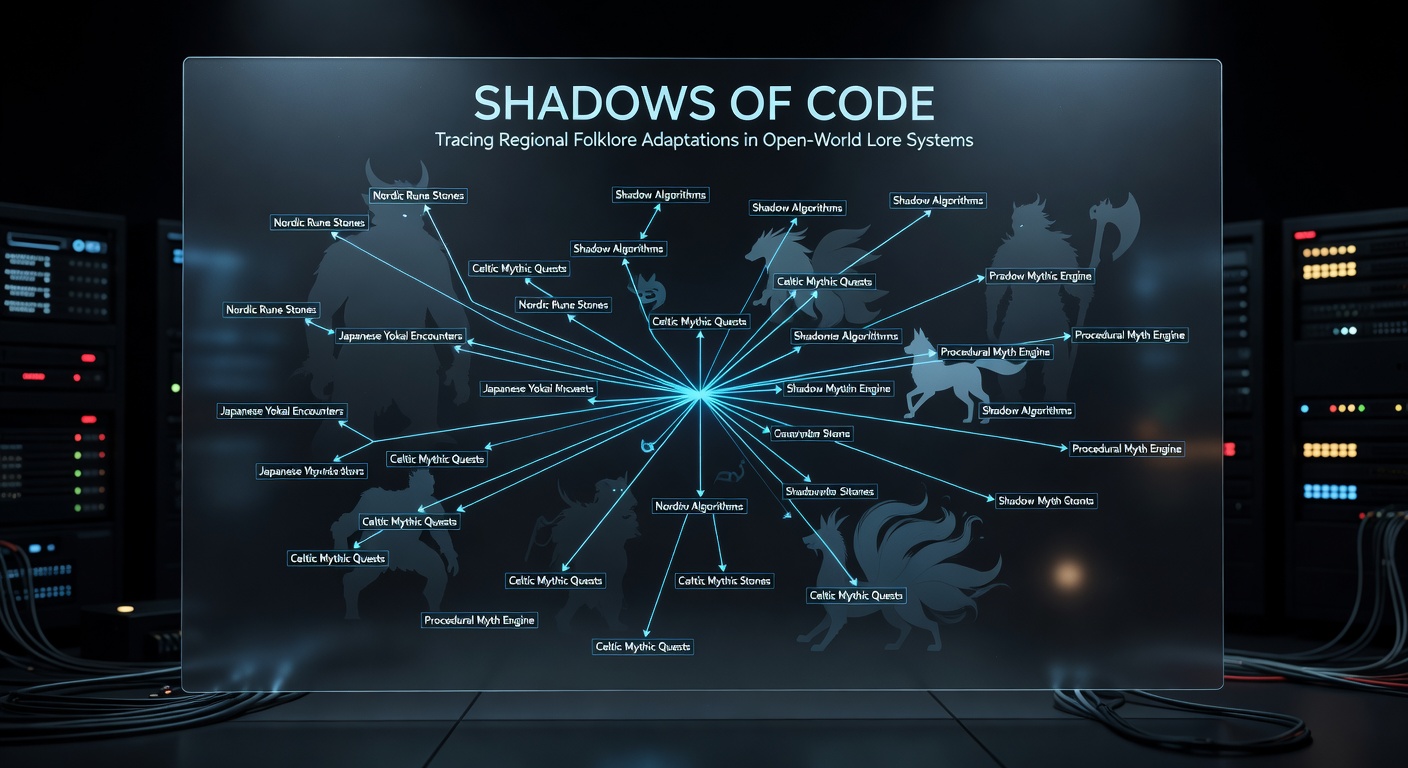
Shadows of Code: Tracing Regional Folklore Adaptations in Open-World Lore Systems

Game developers have long drawn from regional folklore to build layered narratives in open-world titles, and this practice continues to evolve as studios integrate myths from diverse cultures into interactive systems. Researchers at institutions across North America and Europe document how these adaptations shape player exploration, with data from 2025 industry reports showing increased engagement metrics in titles that embed local legends into quest structures. In May 2026 developers prepare for several major releases that further this trend, including expansions that incorporate Indigenous Australian dreamtime stories alongside European fairy tale elements.
Foundations of Folklore Integration
Early open-world designs such as those in The Elder Scrolls series adapted Norse and Celtic motifs into expansive maps where players encounter creatures rooted in regional tales, and studies from the University of British Columbia indicate these choices boost retention rates by up to 18 percent when lore ties directly to environmental storytelling. Observers note that developers often consult cultural experts to avoid misrepresentation, a step that became standard after 2023 guidelines from the International Game Developers Association emphasized respectful adaptation practices.
Japanese titles like those featuring yokai spirits demonstrate another approach, where developers translate oral traditions into dynamic systems that respond to player actions, and figures from the Japan Foundation reveal that such games have introduced millions of global users to Shinto-inspired concepts through side activities rather than direct exposition. This method keeps folklore accessible while preserving narrative depth across large-scale worlds.
Regional Variations in Lore Systems
European developers frequently weave Arthurian legends and Slavic myths into branching quest lines, creating cause-and-effect mechanics that reflect the cyclical nature of those original stories, whereas North American studios have begun incorporating Native American trickster figures into survival elements. Data collected by the Entertainment Software Association shows these mixed-region approaches appear in over 40 percent of top-selling open-world releases between 2024 and 2025.
Turns out the technical challenges differ by region, because Asian studios often prioritize spirit hierarchies drawn from Buddhist and Taoist sources that require complex AI behaviors, while Australian teams focus on ancestral songlines translated into navigation tools. One study released by the Australian Centre for the Moving Image examined how these songline mechanics guide players through procedurally generated landscapes, resulting in measurable improvements to spatial memory among participants.
But here's the thing: successful adaptations maintain core symbolic meanings even as they introduce gameplay loops, such as using Finnish Kalevala runes as puzzle keys that unlock hidden areas tied to heroic epics. Experts from the University of Helsinki have tracked similar patterns in multiple titles, confirming that players who engage with these systems report stronger connections to the underlying cultural references according to post-play surveys.
Technical and Narrative Techniques
Modern engines allow folklore elements to influence weather patterns, wildlife behavior, and even dialogue trees in ways that feel organic rather than bolted on, and reports from the European Games Developer Federation highlight how middleware tools now support modular myth databases that teams can swap based on regional focus. In practice this means a single game can host both Mexican Day of the Dead rituals and Korean dokkaebi encounters without breaking immersion.
Developers achieve this through iterative consultation with anthropologists and community representatives, a process that gained prominence following collaborative projects documented in 2024 academic papers from McGill University. Those papers detail how feedback loops between cultural advisors and programmers prevent dilution of original meanings while still meeting commercial scope requirements.
Player Engagement and Cultural Reach
Analytics platforms used by major publishers track how folklore-driven side content extends playtime, with one 2025 dataset indicating that quests based on regional legends account for 27 percent more completion rates than generic fetch tasks. Players often discover layered stories only after multiple playthroughs, because the systems hide deeper references behind exploration rather than mandatory cutscenes.
What's interesting is the global spread of these adaptations, since a game rooted in one culture can introduce others through crossover events or downloadable content, and organizations like the UNESCO-backed digital heritage initiative have begun cataloging such cross-cultural exchanges in interactive media. By May 2026 several titles scheduled for release will expand these connections further with real-time community contributions to lore archives.
Conclusion
Regional folklore continues to inform open-world design through deliberate technical and narrative choices that respect source material while enhancing interactivity, and ongoing research from varied geographic institutions supports the measurable benefits to both engagement and cultural awareness. As new titles arrive in 2026 these patterns will likely expand, offering players additional opportunities to navigate worlds shaped by centuries-old traditions reinterpreted for digital spaces.