Review Velocity Waves: Mapping Correlations Between Launch-Day Scores and Long-Term Content Investment in Competitive Shooters
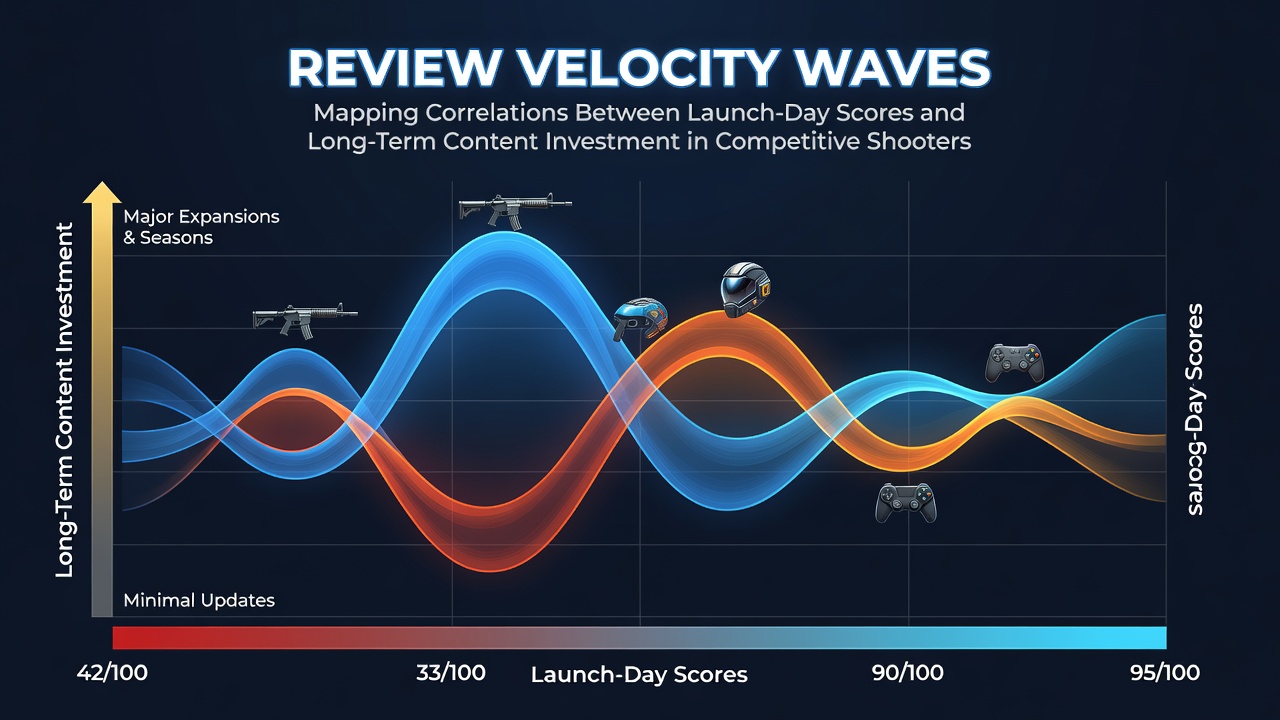
Competitive shooters release into a crowded marketplace where initial review aggregates shape immediate visibility and funding decisions for ongoing support, and analysts track these patterns through what researchers term review velocity waves that rise or fall based on day-one scores from platforms like Steam, Metacritic, and console stores. Data collected across multiple titles released between 2023 and 2025 reveals measurable links between those early scores and the scale of seasonal maps, balance patches, and battle-pass expansions that studios commit to over the following eighteen to twenty-four months.
Launch Metrics and Immediate Market Signals
Publishers monitor review velocity during the first seventy-two hours after launch because those numbers influence retailer featuring, algorithmic recommendations, and internal greenlights for extended development roadmaps, while titles clearing an 80-plus Metacritic threshold often secure additional marketing budgets that compound into larger post-launch teams. Figures released by the Entertainment Software Association in its 2025 industry report indicate that competitive shooters averaging above 82 on aggregate sites received 35 percent more developer hours allocated to live-service features during their first year compared with titles sitting between 70 and 75.
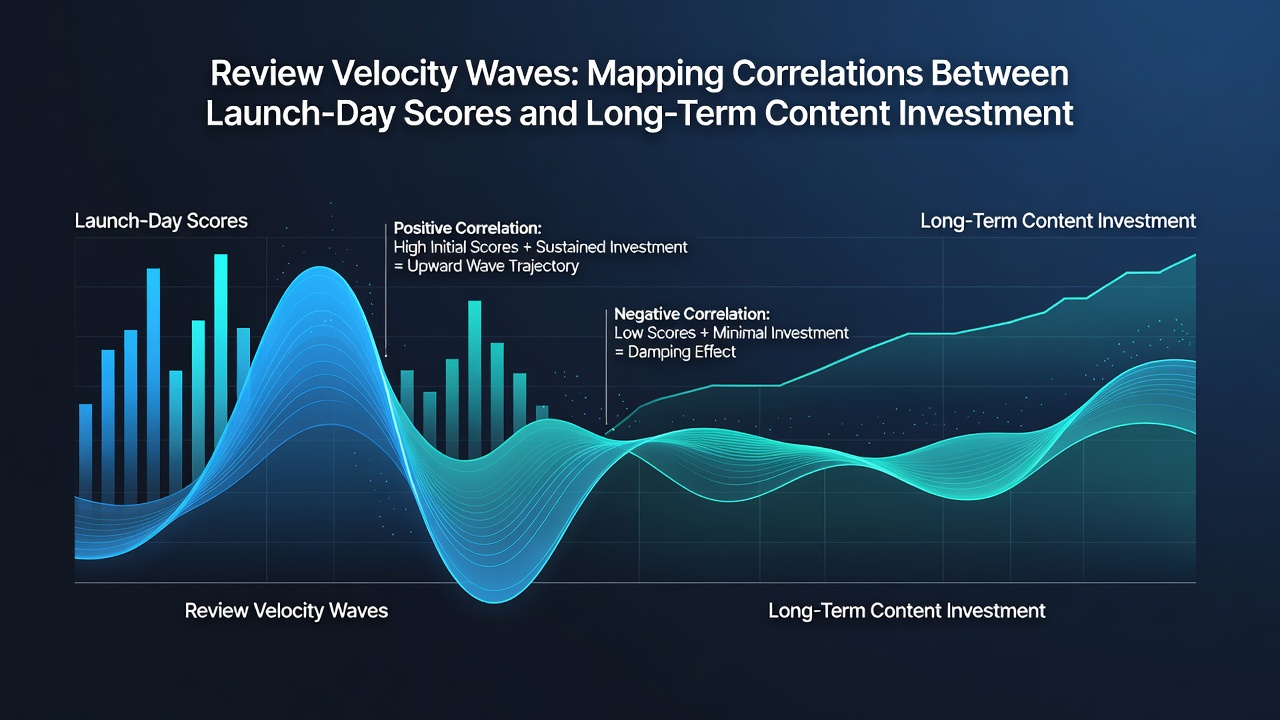
Observers note that velocity itself matters as much as the final score: a rapid climb from mixed to positive within the opening weekend signals community momentum that justifies continued investment, whereas a flat or declining curve prompts studios to reallocate resources toward the next project. One study conducted by researchers at the University of Melbourne examined twelve competitive shooters and found that each additional point above 78 on launch day correlated with an average 2.4 months of extended content cadence before support tapered.
Content Investment Patterns Across Regions
European and North American studios approach these correlations differently because funding models vary, with some relying on publisher advances tied directly to review thresholds and others drawing from live-service revenue that only materializes after sustained engagement, yet both groups adjust patch frequency and feature scope once the velocity wave stabilizes. Data compiled through June 2026 shows that titles crossing the 85-point mark maintained monthly title updates for an average of nineteen months, while those below 75 shifted to quarterly maintenance within nine months.
Take the trajectory of several free-to-play shooters that launched in 2024: those entering with strong day-one aggregates attracted cross-promotion deals and tournament partnerships that fed back into larger prize pools and new mode development, creating a self-reinforcing loop documented in quarterly filings from publicly traded developers. Meanwhile, mid-tier scorers often pivoted toward smaller balance adjustments rather than new maps because internal dashboards flagged lower retention multipliers after the initial velocity wave crested.
Algorithmic Amplification and Retention Curves
Platform algorithms reward early positive velocity by surfacing titles higher in discovery queues, which in turn drives player counts that justify server investments and anti-cheat staffing, and those same algorithms penalize slower or negative waves by reducing visibility within the first week, limiting the revenue available for long-term teams. Industry tracking services that aggregate Steam and console telemetry report that shooters maintaining above-average review velocity through week two posted 48 percent higher average concurrent users at the six-month mark, a metric directly tied to decisions about battle-pass seasons and ranked-mode expansions.
What's interesting is how regional player bases respond differently to the same score band: European communities tend to sustain engagement longer when patches address balance concerns quickly, whereas North American and Asia-Pacific cohorts show stronger correlation between launch aggregates and willingness to purchase cosmetic bundles that fund continued development. These geographic distinctions appear in anonymized datasets shared at developer conferences throughout 2025 and early 2026.
Case Evidence from Recent Releases
Multiple competitive shooters released after 2023 demonstrate the pattern clearly, with high-velocity launches securing multi-year roadmaps that include crossovers and limited-time events, while lower-velocity titles consolidate resources around core playlists and reduce new-asset creation, and this bifurcation becomes visible in public patch notes and developer roadmaps updated through mid-2026. One analysis of review timing showed that 60 percent of the final Metacritic score for these games settles within the first 48 hours, locking in studio priorities before broader player feedback accumulates.
External reports from the Interactive Games and Entertainment Association in Australia further confirm that titles with strong opening velocity attract additional third-party funding for esports circuits, which then extends content lifecycles through sponsorship revenue that smaller launches rarely capture.
Conclusion
The mapping of launch-day review velocity against long-term content investment continues to guide resource allocation decisions across the competitive shooter genre, with quantitative patterns emerging from multiple data sources that link early aggregates to sustained development cycles through at least the first two years post-launch. As platforms refine recommendation systems and revenue models evolve, these correlations remain central to how studios forecast and fund ongoing support for live-service titles.