How Digital Storefront Algorithms Prioritize Titles Based on Initial Review Velocity
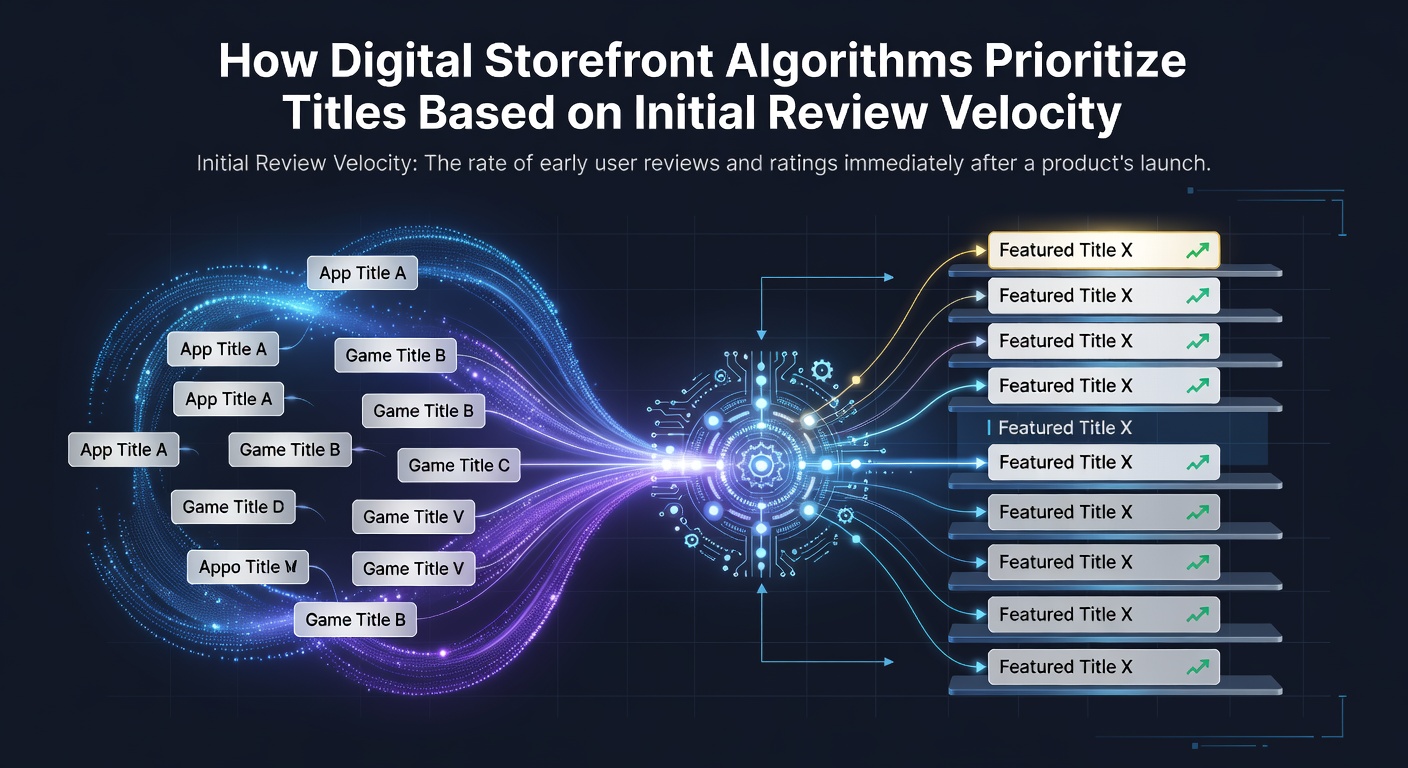
Digital storefront algorithms evaluate initial review velocity as one of several signals when determining which titles receive prominent placement in recommendations, search results, and featured sections. Review velocity refers to the rate at which user reviews accumulate during the first days and weeks after launch, and platforms process this metric alongside download counts, playtime data, and refund rates to adjust visibility rankings.
Storefront operators collect review data in real time, then feed those numbers into machine learning models that predict long-term engagement potential. When a title generates reviews faster than comparable releases in the same genre or price tier, the algorithm often increases its exposure to new users who match the early reviewer demographics. This process occurs continuously, with adjustments happening multiple times per day on major platforms.
Mechanics of Review Velocity Scoring
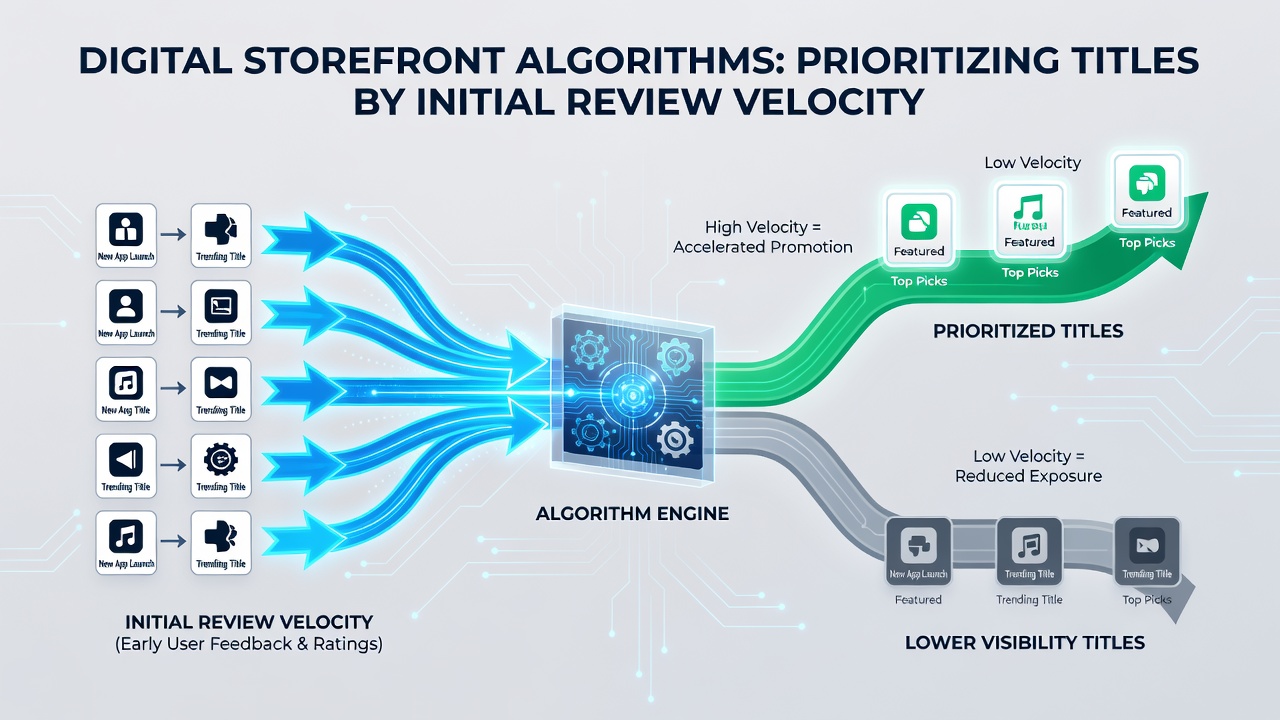
Algorithms assign weighted scores to review velocity by comparing a title's accumulation rate against historical benchmarks for similar products. A game that receives several hundred reviews within forty-eight hours typically triggers an upward adjustment in recommendation priority, whereas slower accumulation keeps the title in lower-visibility categories. The models also account for review sentiment distribution, so rapid positive reviews carry different weight than rapid mixed or negative feedback.
Platform engineers update these models periodically to reduce manipulation attempts, such as coordinated review campaigns or review bombing incidents. Data from June 2026 shows that storefronts implemented additional filters that cross-reference review timestamps with account creation dates and hardware identifiers to distinguish organic velocity from artificial spikes.
Factors Integrated with Velocity Metrics
Review velocity operates within a broader set of ranking inputs that include concurrent player counts, wishlist conversion rates, and regional performance variations. When velocity aligns with strong wishlist-to-purchase conversion, the combined signal strengthens algorithmic promotion more than velocity alone. Developers who monitor these interconnected metrics often adjust post-launch communication strategies to sustain review momentum beyond the initial launch window.
Regional storefront variations exist as well. European platforms apply additional weighting for localized review language diversity, while North American systems emphasize cross-genre performance comparisons. Observers note that these geographic differences create distinct optimization paths for publishers targeting multiple storefronts simultaneously.
Impact on Release Strategies
Publishers time review solicitation campaigns around launch windows to influence velocity curves, yet algorithms discount reviews that arrive through direct prompts when they detect patterns inconsistent with organic discovery. Some development teams stagger update releases to re-ignite review activity at later milestones, thereby extending the period during which velocity signals remain relevant to ranking decisions.
Research conducted by academic groups at institutions in Canada and Australia indicates that titles maintaining above-average velocity for at least fourteen days post-launch achieve longer-term visibility retention compared with titles that experience sharp early spikes followed by rapid drop-offs. These findings align with internal platform reports that track recommendation click-through rates over multi-week periods.
Platform-Specific Implementations
Each major digital storefront applies its own velocity thresholds and decay functions. One system reduces the influence of early velocity after thirty days unless sustained activity continues, whereas another maintains partial weighting for up to ninety days when accompanied by consistent player retention data. These differences encourage publishers to tailor launch calendars and community engagement plans according to the primary distribution channel.
Third-party analytics services now offer velocity forecasting tools that ingest anonymized historical data to project likely algorithmic responses. Developers using these services report more precise scheduling of marketing pushes that coincide with expected review influx periods, though the underlying platform algorithms continue to evolve independently of such external modeling.
Regulatory and Transparency Developments
Industry organizations including the Interactive Software Federation of Europe have published guidelines on algorithmic transparency that address how review velocity factors into ranking decisions. ISFE documentation outlines recommended disclosure practices for platforms operating within European markets. Similar discussions have occurred through trade associations in Asia-Pacific regions, focusing on fair access for independent developers whose titles may experience slower initial review accumulation due to smaller marketing budgets.
Regulatory bodies in multiple jurisdictions continue to examine whether velocity-based prioritization creates unintended barriers for smaller studios. Reports compiled through 2026 highlight ongoing data collection efforts rather than finalized policy changes, with platforms responding by publishing aggregated ranking methodology summaries that omit proprietary model details.
Conclusion
Review velocity functions as a dynamic input within larger recommendation systems that balance multiple performance indicators. Platforms refine these systems regularly to maintain relevance and resist manipulation, creating an environment where initial post-launch activity shapes short-term visibility while sustained metrics determine longer-term placement. Developers track these patterns through available analytics and adjust strategies accordingly, yet the core algorithmic logic remains controlled by storefront operators who integrate velocity data with broader engagement signals.