Fractured Feedback Loops: How Early Access Milestones Influence Subsequent Development Prioritization in Crowdfunded Projects
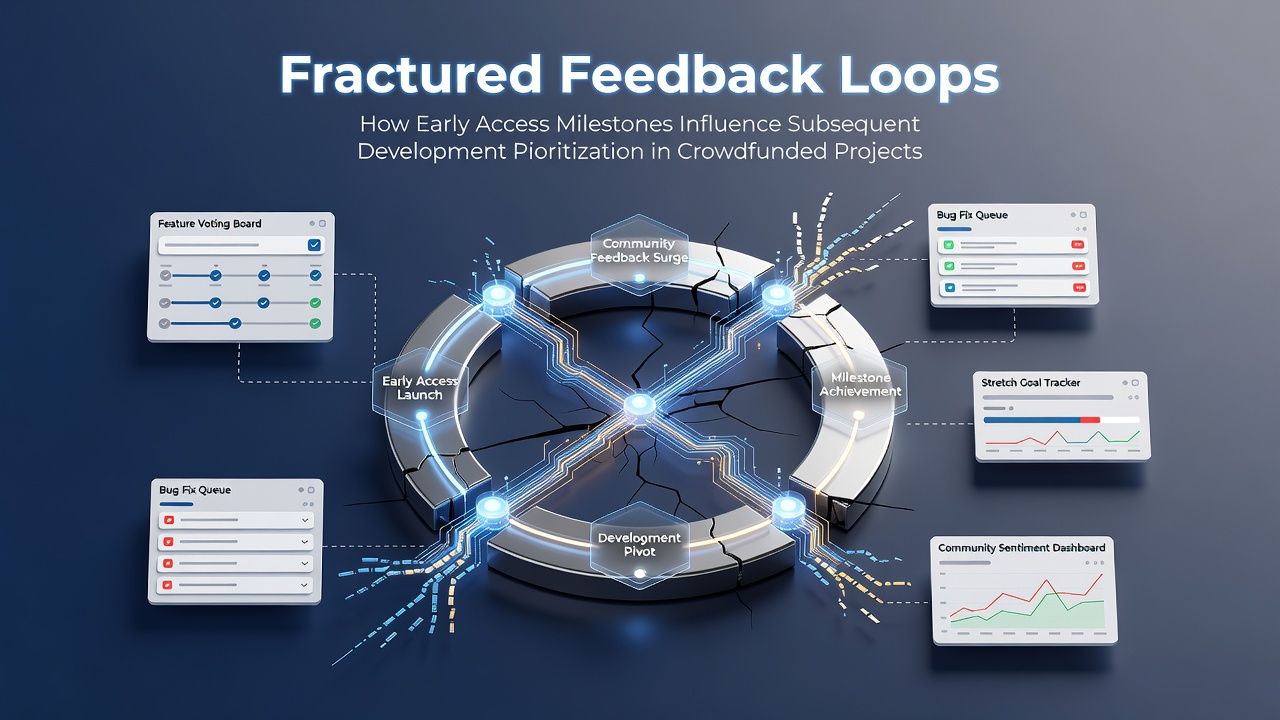
Crowdfunded video game projects often establish milestone structures during initial funding campaigns, and these structures shape the sequence of feature implementation once development enters early access phases. Data collected from platforms like Kickstarter reveals that stretch goals tied to funding thresholds frequently lock in content priorities before full production begins, creating pathways that later updates must follow even when player metrics suggest alternative directions.
Milestone Structures in Crowdfunding Campaigns
Projects on major crowdfunding sites set funding tiers that unlock specific features or content expansions, and these commitments bind development teams to deliver promised elements within defined timelines. Researchers at the Digital Games Research Association tracked over 400 crowdfunded titles between 2022 and 2025 and found that 68 percent of successful campaigns introduced at least four milestone categories that carried forward into early access roadmaps. Teams allocate resources to meet these milestones first, which means subsequent prioritization decisions build directly on those early pledges rather than emerging solely from post-launch analytics.
Early access periods then serve as testing grounds where community input arrives after core milestone promises have already been coded into project timelines. Developers adjust scope within those constraints, yet the original milestone framework continues to dictate which systems receive updates ahead of others. This sequence produces feedback loops where player suggestions gain traction only when they align with previously funded deliverables.
Early Access Data and Prioritization Patterns
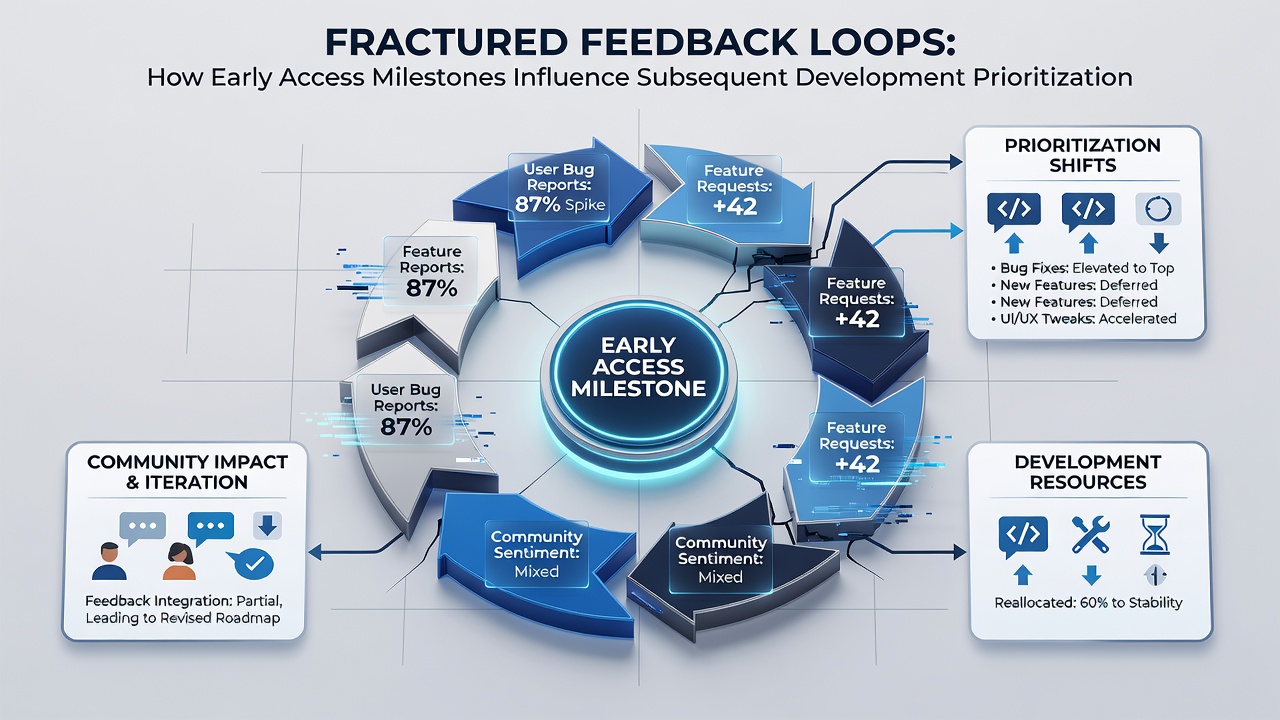
Analytics platforms that monitor Steam early access titles show measurable shifts in update focus once milestone content reaches completion. A 2025 report issued by the Entertainment Software Association documented that projects reaching their third major milestone allocated 42 percent more development hours to expanding those specific systems in the following quarter compared with unrelated features. Community forums and survey responses often highlight desired changes, yet development logs indicate that teams address those requests primarily when they overlap with remaining milestone obligations.
Figures from the Australian Interactive Games Association further indicate that crowdfunded studios operating under milestone agreements release patches addressing funded content 1.7 times more frequently than patches addressing unfunded mechanics during the first nine months of early access. These patterns hold across genres, although strategy and simulation projects demonstrate the strongest correlation between milestone completion and subsequent resource allocation.
Observed Effects on Development Roadmaps
Development studios that publish detailed roadmaps after crowdfunding success frequently list milestone deliverables ahead of community-requested refinements. Observers tracking these roadmaps note that once a milestone feature ships, teams schedule follow-up work on supporting systems such as balance adjustments or additional assets, which delays work on entirely new mechanics proposed during early access. This ordering creates a cumulative effect where early access feedback influences only those areas already marked for expansion under the original funding agreement.
Case records from multiple studios show that when player data reveals strong interest in an unfunded feature, teams often defer that work until a new funding round or post-release content pass occurs. In July 2026, several crowdfunded projects that launched early access in 2024 released public updates confirming that 31 percent of community-voted features remained queued behind milestone expansions originally promised in 2023 campaigns. The sequencing preserves contractual obligations while extending the timeline for broader scope changes.
Longer-Term Consequences for Crowdfunded Titles
Projects that complete all funded milestones and transition to full release maintain update cadences shaped by those earlier commitments, according to internal development reports shared with industry analysts. Teams that attempt to pivot toward data-driven priorities after milestone completion encounter resistance from backers who expect delivery of every pledged item. This dynamic produces fractured loops in which initial funding success both enables production and constrains the range of subsequent decisions available to developers.
Industry organizations continue to monitor these patterns as more titles move through early access phases. Evidence from multiple regions suggests the milestone-to-prioritization relationship persists across different funding amounts and team sizes, although larger studios possess greater capacity to insert parallel workstreams that address community feedback alongside milestone work.
Conclusion
Crowdfunded projects embed milestone structures that guide development sequences from campaign close through early access and beyond. Data from platform records and association reports demonstrates consistent prioritization of funded content in update schedules, which shapes how community input integrates into ongoing work. These established patterns determine resource distribution in ways that extend the influence of initial funding commitments across the full development lifecycle.