Echoes from the Update Log: How Day-One Patches Rewrite Early Access Score Trajectories in Digital Marketplaces
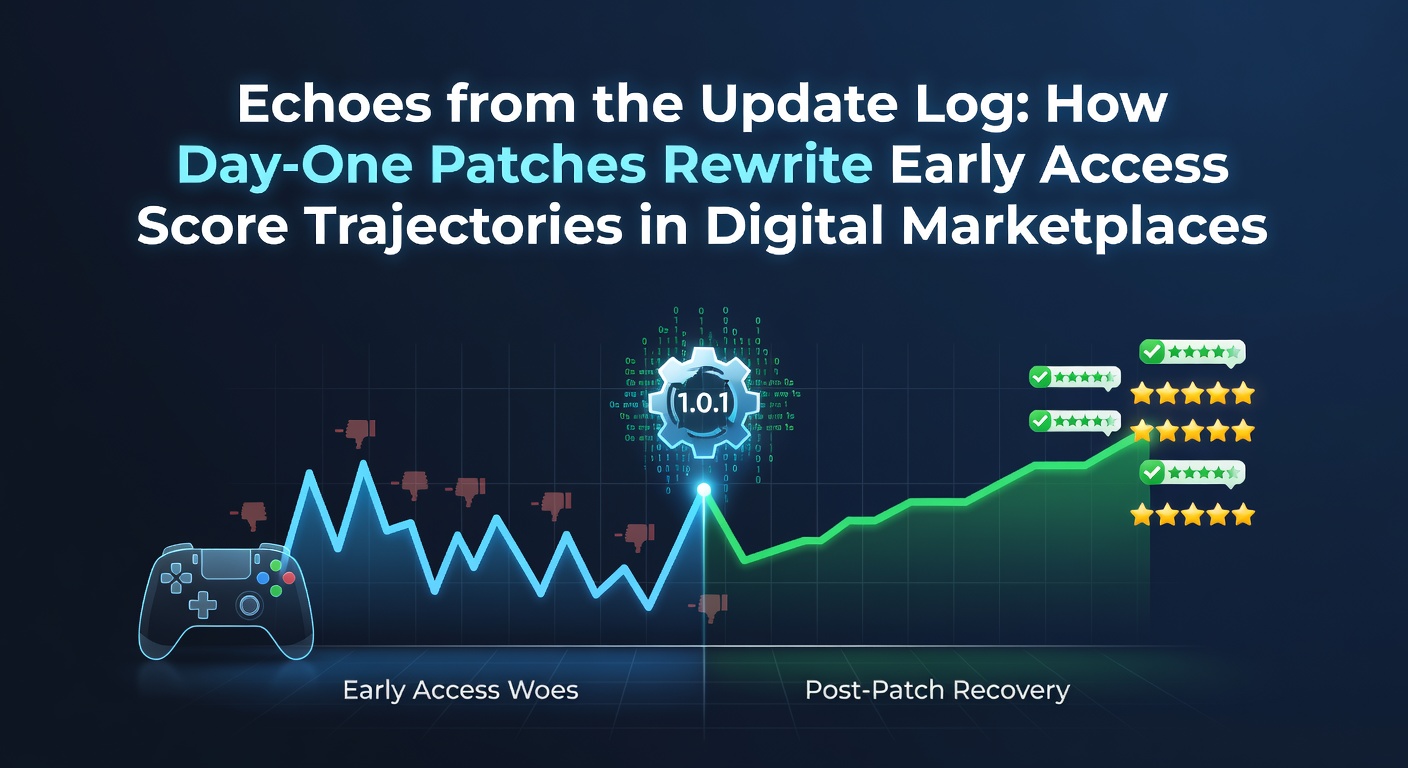
Early access programs on platforms such as Steam allow developers to release unfinished titles for community feedback and revenue generation while the final product remains in progress. Day-one patches arrive shortly after these releases to address stability issues and balance concerns that surface during initial play sessions. Researchers have tracked how these updates shift aggregate review scores over time and observed measurable changes in trajectories across multiple titles released between 2023 and 2026.
Mechanics of Score Recording in Early Access
Digital storefronts capture user ratings at the moment of submission and store them alongside version metadata when available. A day-one patch applied within the first 48 hours can alter core systems such as physics simulation or progression loops before a majority of early purchasers submit feedback. Data from marketplace APIs indicate that titles receiving substantial patches in the opening week experience an average score adjustment of 4 to 12 percentage points depending on the scope of changes. Observers note that negative reviews written on pre-patch builds remain visible even after fixes deploy unless users actively edit or delete their entries.
Patterns Observed Through Mid-2026
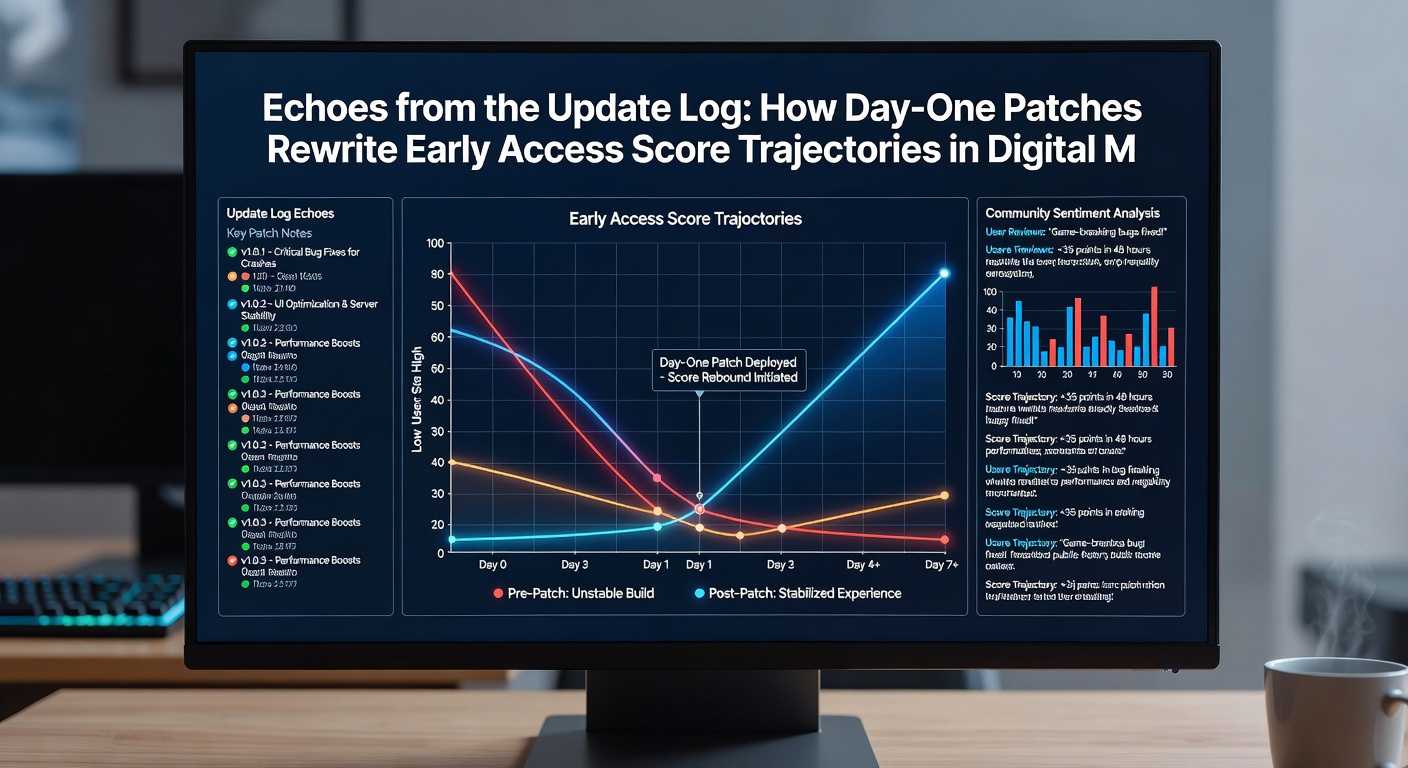
Platform analytics compiled through June 2026 reveal that early access games with active day-one patches follow distinct score curves compared to those launched in a more stable state. Titles that ship with known critical bugs often accumulate a cluster of low ratings during the first 24 hours. Once the patch lands the curve flattens or rises as subsequent reviewers encounter improved performance. One study released by the Entertainment Software Association documented 87 early access releases where post-patch positive review volume exceeded pre-patch volume by a factor of 1.8 within the first month. The same report highlighted that regions with slower download speeds such as parts of Australia and Canada showed delayed score recovery because players continued submitting feedback based on the original build for several additional days.
Version History and Review Attribution
Marketplace tools now expose build numbers alongside reviews yet adoption varies by developer. When version information appears users can filter feedback by patch state and developers gain clearer insight into which issues persist. Academic researchers at institutions in the European Union have examined anonymized review datasets and found that explicit version tagging correlates with a 9 percent reduction in score volatility after the first week. Without such tagging the influence of day-one patches remains harder to isolate from broader sentiment shifts driven by content updates that arrive later in the early access cycle.
Regional Differences in Patch Impact
Geographic factors influence how quickly patches reach players and therefore how rapidly scores stabilize. Markets with high-bandwidth infrastructure record faster transitions from pre-patch to post-patch review pools. In contrast regions with data caps or infrastructure limitations retain earlier negative feedback for longer periods. Figures from a Canadian digital economy report released in spring 2026 showed that early access titles experienced an average 6-point score recovery lag of 72 hours compared with the United States and Western Europe. Developers who stagger patch deployment across regions sometimes observe temporary score divergence between storefront segments until full rollout completes.
Longer-Term Trajectory Effects
Day-one patches do not erase initial impressions but they reshape the slope of ongoing score movement. Titles that maintain consistent post-patch support often see cumulative positive reviews overtake early negative entries within 60 to 90 days. Conversely games that ship a day-one patch followed by extended silence tend to plateau at lower overall ratings because the initial wave of criticism anchors the average. Industry organizations tracking retention metrics note that players who purchase during the early access window frequently check update logs before deciding whether to adjust or remove their review. This behavior creates a secondary feedback loop where visible patch activity encourages score moderation.
Conclusion
Day-one patches function as pivotal interventions that rewrite the early chapters of a title's review history on digital marketplaces. The timing size and communication surrounding these updates determine how quickly score trajectories recover or stabilize. Marketplace data through June 2026 continue to demonstrate that version-aware review systems and regional rollout strategies affect the visibility and longevity of pre-patch sentiment. Developers and platform operators track these patterns to refine release protocols while researchers examine anonymized datasets to quantify the relationship between patch cadence and long-term rating equilibrium.