Crowdsourced Bug Tracking and Iterative Development in Live Service Games
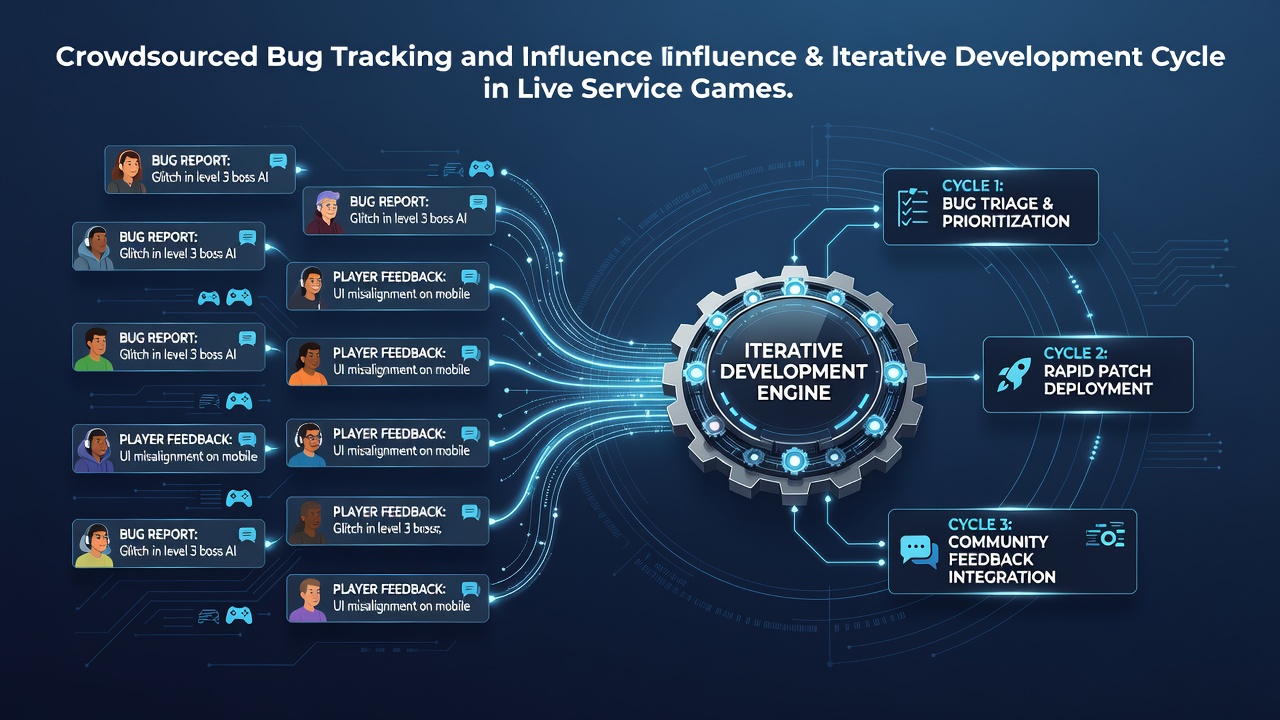
Live service games operate on continuous update schedules that depend on rapid identification and resolution of technical issues, and crowdsourced bug tracking has become a central mechanism in this process. Players submit reports through integrated tools, forums, and third-party platforms, which studios aggregate to prioritize fixes during development cycles.
Research indicates that systems drawing from player input allow teams to detect issues across diverse hardware configurations and play patterns that internal testing often misses. Data from multiple titles shows that community-driven reports surface problems within hours of a patch deployment, shortening the time between discovery and resolution compared to traditional QA pipelines alone.
Mechanics of Crowdsourced Tracking Systems
Studios integrate reporting features directly into game clients or companion apps, while external communities organize findings on platforms such as Discord servers and dedicated wikis. Votes adn severity ratings supplied by participants help sort reports, so developers receive filtered lists ranked by frequency and impact. Observers note that this structure reduces noise and surfaces reproducible cases more efficiently than unmoderated channels.
Live service titles maintain public or semi-public trackers where players can follow status updates on reported items. This transparency loop keeps contributors engaged and supplies developers with additional reproduction steps when initial reports lack detail. As of June 2026 several major publishers expanded these trackers to include automated crash uploads that link directly to player accounts, further accelerating triage.
Influence on Iterative Cycles
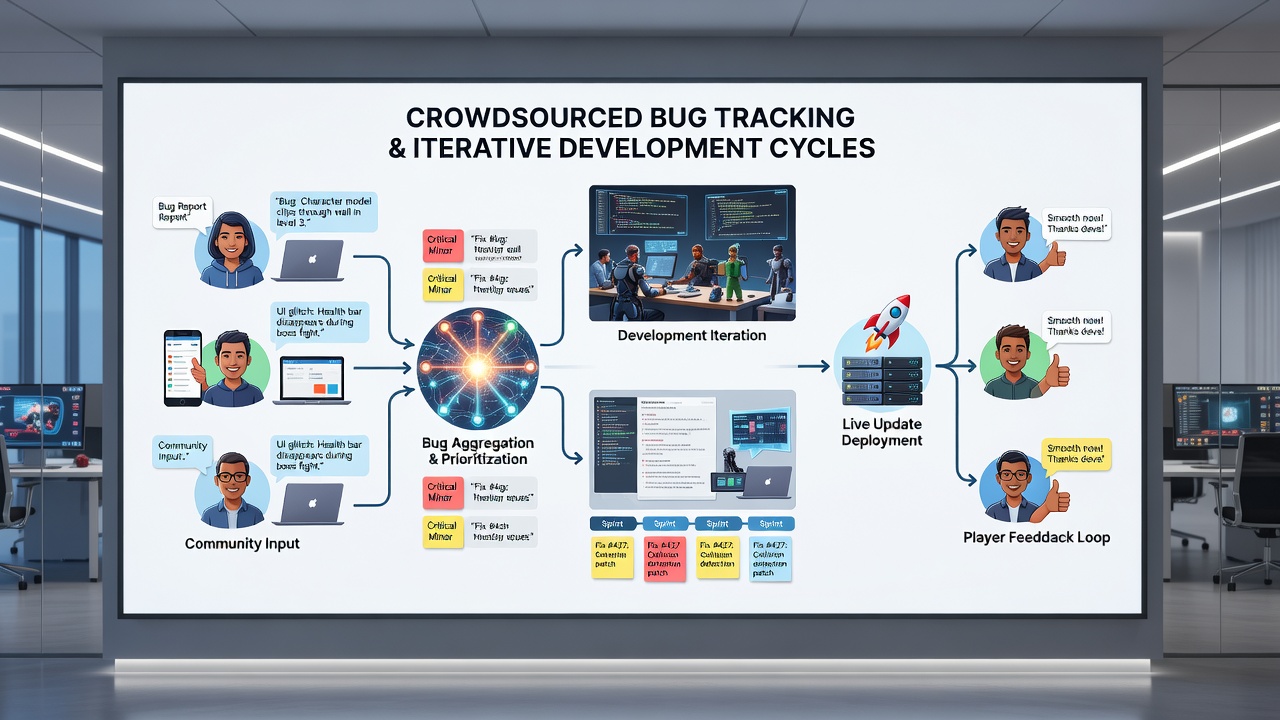
Iterative development in live service environments consists of short sprints that deliver balance changes, new content, and stability improvements. Crowdsourced data feeds directly into sprint planning meetings, where teams allocate resources based on report volume and severity rather than internal assumptions. Studies from academic groups in Canada have documented how this feedback shortens the interval between identifying a regression and deploying a corrective patch.
Teams adjust priorities weekly because incoming reports reveal patterns across regions and player segments that would otherwise require extensive telemetry analysis. When a critical exploit surfaces through community channels, developers can isolate the affected code path and test fixes against the same user base that reported the issue, closing the validation loop faster than staged rollouts alone permit.
Case Examples Across Major Titles
One widely observed instance occurred in a persistent multiplayer shooter where community reports flagged server desync problems during large-scale events. Within two weeks the studio released targeted hotfixes that addressed the majority of reported cases, an outcome attributed to the volume and specificity of player-submitted logs. Similar patterns appear in open-world survival games, where environmental collision bugs reported by explorers reach the top of priority queues after accumulating sufficient upvotes.
Another example involves a cooperative action title that adopted a public roadmap linked to its bug tracker. Players could see when reports moved from acknowledged to in-progress to resolved, and subsequent patches incorporated community-suggested workarounds while permanent fixes were prepared. This approach maintained engagement during extended maintenance periods and supplied developers with real-time confirmation that issues had been mitigated.
Data Integration and Tool Evolution
Modern tracking platforms combine manual submissions with automated telemetry, creating hybrid datasets that developers query for trends. Machine learning models trained on historical reports now suggest duplicate groupings and severity estimates, reducing manual review time. Figures from industry reports published by the Entertainment Software Association reveal that studios using these combined systems allocate fewer engineering hours to triage and more to remediation.
European research institutions have examined how regional differences in hardware and network conditions affect report quality. Their findings show that crowdsourced datasets capture edge cases more comprehensively than centralized testing farms, particularly for console-specific controller mappings and regional server routing problems. Developers incorporate these insights into region-specific test matrices for subsequent updates.
Challenges and Mitigation Strategies
High volumes of duplicate or low-quality reports can overwhelm small teams, yet platforms mitigate this through automated filtering and reputation systems that weight contributions from verified reporters. Studios also publish guidelines that improve report clarity, leading to fewer follow-up requests for additional information. When these measures are in place, the net effect on cycle time remains positive according to internal metrics shared at industry conferences.
Coordination between community moderators and official support staff further refines the pipeline. Moderators flag emerging trends before they reach developer dashboards, allowing early allocation of resources. This division of labor keeps the system scalable even as player bases grow into millions of concurrent users.
Conclusion
Crowdsourced bug tracking supplies live service studios with continuous, player-generated data that directly shapes sprint priorities and patch deployment schedules. Integration of these reports into existing development tools has shortened feedback loops and improved coverage of hardware and configuration diversity. As platforms refine filtering and automation features, the role of community input continues to expand within iterative cycles across the sector.