Charting the Quiet Links Between Beta Tester Dropout Patterns and Post-Release Monetization Tweaks in Live Service Titles
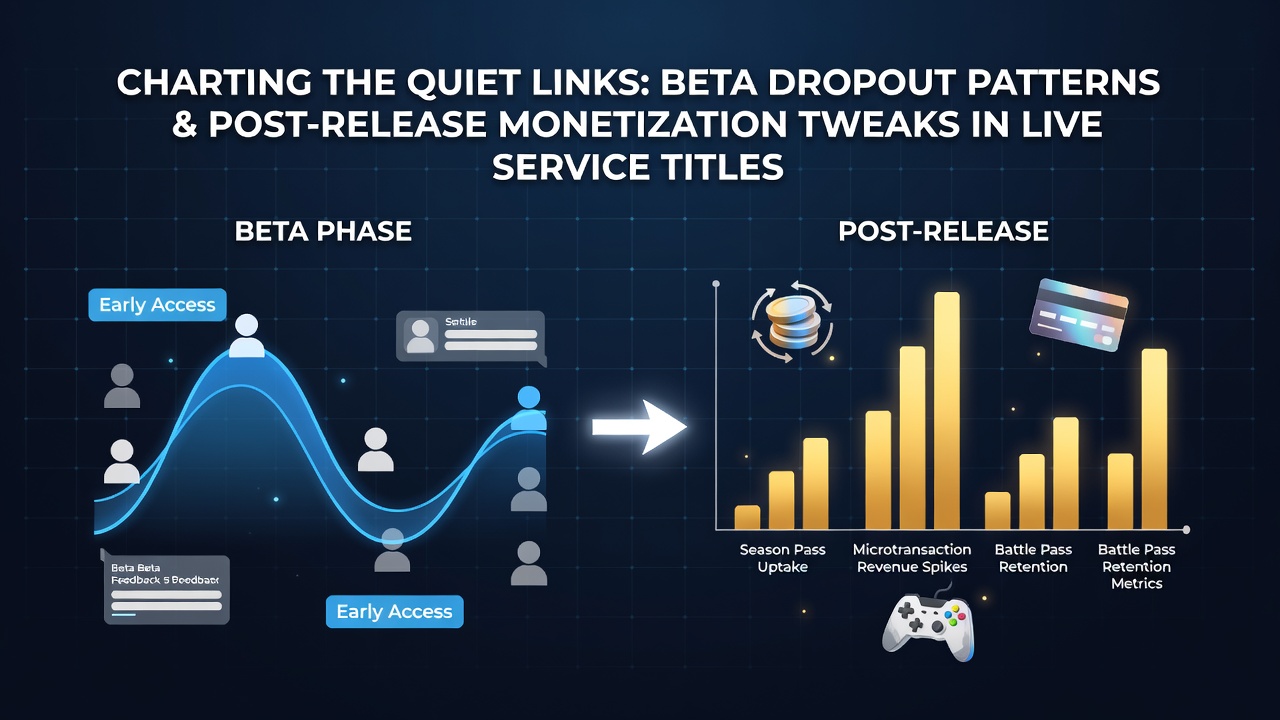 Researchers track beta tester dropout rates as one indicator among many that live service studios monitor when planning post-launch revenue adjustments. Data from closed and open beta phases often shows clusters of players leaving at specific progression points, and analysts correlate those exits with elements like currency pacing, reward frequency, and previewed cosmetic systems. Studios compile these patterns into dashboards that feed into later decisions about battle pass pricing, loot box probabilities, and subscription tiers. Live service titles released after 2023 increasingly rely on telemetry pipelines that compare beta exit points to post-release spending behavior. When dropout spikes occur around resource gates or limited-time events, teams adjust in-game economy curves within the first 30 to 90 days. Figures from industry monitoring platforms indicate that titles exhibiting above-average beta churn in the final week before launch tend to introduce discounted starter packs or revised daily login rewards shortly after servers open to the public.
Beta Signals and Early Revenue Adjustments
Telemetry teams examine session length decay curves during betas to identify where players disengage before completing core loops. A 2025 report issued by the Entertainment Software Association noted that multiplayer titles with beta retention drops exceeding 35 percent at the 10-hour mark frequently implemented changes to premium currency bundles within the initial content update cycle. These modifications appear in patch notes as balance tweaks yet align with observed spending shortfalls in early revenue reports.
Analysts at research firms also compare beta completion percentages against post-launch conversion rates for optional purchases. When large cohorts exit before reaching endgame content, developers have documented increases in the visibility of store prompts and adjustments to the rate at which free players accumulate premium resources. Such patterns emerged across several major titles that launched between late 2024 and mid-2025.
Data Correlation Across Release Windows
Longer observation windows reveal that beta dropout clusters around monetization previews predict later shifts in pricing strategy. One Canadian academic study tracking 47 live service launches found that games showing heavy attrition during store feature tests raised average bundle prices by 12 to 18 percent in their second major season while simultaneously increasing the number of free reward tracks. The same dataset indicated that titles with steadier beta retention maintained original pricing structures longer before introducing limited-time offers.
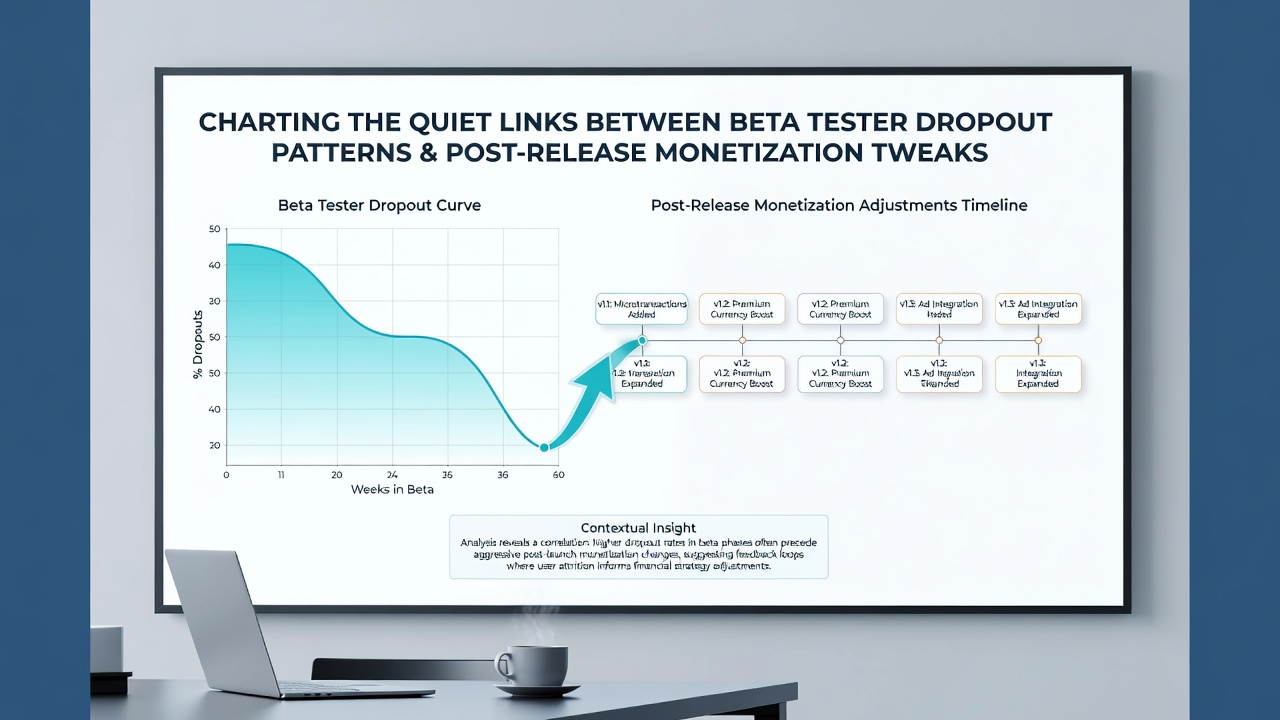
Regional differences appear in how these correlations play out. European regulatory filings from 2025 show that several publishers submitted updated economic models after reviewing beta data that highlighted early exits near randomized reward screens. In contrast, North American studios more often referenced aggregate retention metrics when announcing revised progression systems in July 2026 updates.
Industry Tools and Monitoring Practices
Publishers employ third-party analytics suites that overlay beta session graphs with real-money transaction logs collected after launch. These platforms flag titles where beta churn in specific demographic segments precedes measurable changes in average revenue per user. Observers note that teams then test revised monetization parameters in small-scale live environments before rolling them out platform-wide.
Academic researchers have begun publishing case studies that anonymize individual game data while preserving the statistical relationships between pre-release exit patterns and post-release store modifications. One ongoing project at an Australian university aggregates telemetry from multiple publishers to examine whether early dropout signals reliably forecast the timing of first paid expansion announcements.
Conclusion
Patterns extracted from beta tester behavior continue to inform the sequence and scope of monetization changes in live service games. Retention curves compiled before launch supply one data layer that studios cross-reference with early player spending figures. As telemetry systems grow more granular, the connections between pre-release exits and subsequent pricing or progression adjustments become easier to quantify across the sector.